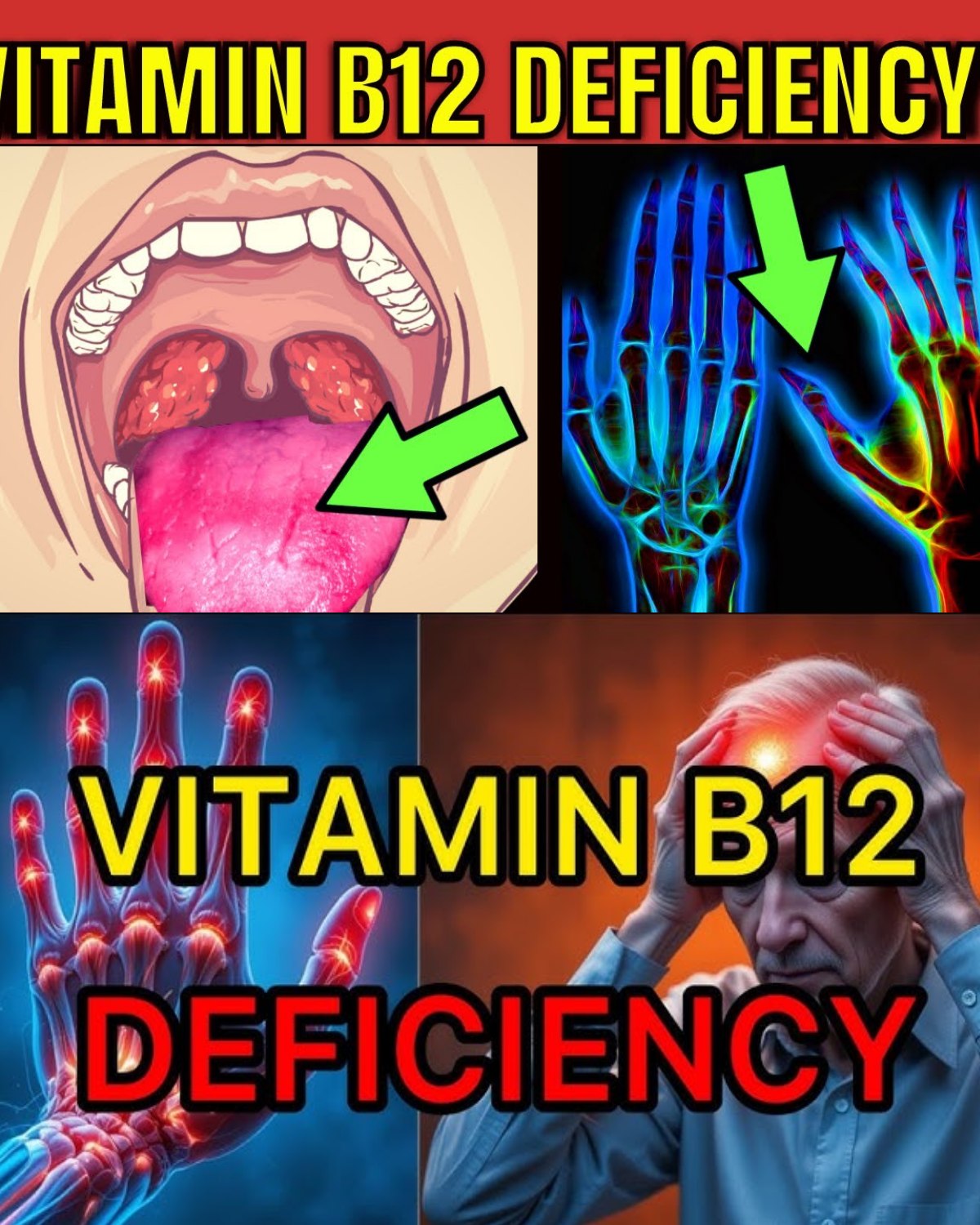
Imagine waking up one morning feeling unusually tired. You chalk it up to poor sleep. But then the fatigue lingers. You start forgetting simple things—your keys, your appointments, even names you should know by heart. Your hands feel tingly, your legs heavy. Weeks turn into months, and before you realize it, your body is sending distress signals you’ve been ignoring.
That’s exactly how Lisa, a 52-year-old teacher, described her journey before she learned the real cause of her decline: a severe Vitamin B12 deficiency.
She thought she was just stressed. But her blood tests told another story.
Why This Vitamin Matters More Than You Think
Vitamin B12 is not just another supplement on your shelf—it’s essential for keeping your brain sharp, your nerves functioning, and your blood healthy. It helps your body make red blood cells and supports DNA synthesis, the very foundation of life.
Yet millions of Americans, especially adults over 45, are running low on this vital nutrient—and most have no idea until symptoms become severe.
Recent health data suggests that up to 40% of adults may have low or borderline B12 levels, with the risk increasing dramatically as we age.
But here’s the scary part: Vitamin B12 deficiency doesn’t always announce itself loudly. It creeps in slowly, disguising itself as everyday tiredness or mild forgetfulness—until the damage becomes harder to reverse.
The Hidden Danger of a “Silent” Deficiency
So, what makes Vitamin B12 deficiency so dangerous? It’s not just about fatigue. Without enough B12, your body can’t produce healthy red blood cells. That means less oxygen reaches your organs, including your brain.
Over time, that oxygen deprivation can lead to:
- Nerve damage causing numbness or tingling in your hands and feet.
- Memory problems or mood swings.
- Weakness, dizziness, or shortness of breath.
- Pale skin or even depression.
It sounds dramatic, but doctors warn it’s all too common.
Dr. Michelle Andrews, a nutrition specialist, explains: “Vitamin B12 deficiency is one of the most underdiagnosed conditions I see. People think they’re just tired, but in reality, their cells are starving for oxygen.”
Case Study #1: The Executive Who Forgot His Passwords
Mark, a 47-year-old finance executive, used to thrive under pressure. But after months of brain fog and irritability, he began making mistakes at work. He couldn’t remember figures he once recited easily.
A routine checkup revealed dangerously low B12 levels. Within weeks of supplementation, his mental clarity returned.
“I thought I was burning out,” he said. “Turns out, my brain was running on empty.”
Mark’s story isn’t rare—and neither is the damage that can happen if it’s ignored.

The Early Signs Most People Miss
If you’ve been brushing off certain symptoms, now’s the time to listen closely. Vitamin B12 deficiency can show up in subtle ways long before it becomes serious.
Watch for these warning signs:
- Persistent Fatigue – Even after a full night’s sleep, you feel drained.
- Tingling or Numbness – Especially in your hands or feet, a sign of nerve damage.
- Pale or Yellow Skin – A result of reduced red blood cells.
- Brain Fog or Memory Lapses – Trouble focusing, forgetting words, or losing your train of thought.
- Mood Changes – Irritability, anxiety, or even depression.
- Weakness or Shortness of Breath – Especially during light physical activity.
- Glossy, Smooth Tongue – One of the lesser-known physical symptoms.
If any of these sound familiar, your body could be calling for help.
The Science Behind B12: What Your Body Actually Needs
Let’s take a closer look at what makes this vitamin so powerful.
| Nutrient | Function in the Body | Deficiency Risks |
|---|---|---|
| Vitamin B12 (Cobalamin) | Helps make red blood cells, supports nerve function, aids DNA synthesis | Fatigue, nerve damage, memory loss, depression |
| Folic Acid | Works with B12 for cell growth and red blood cell formation | Anemia, weakness, poor concentration |
| Iron | Transports oxygen in the blood | Tiredness, dizziness, shortness of breath |
Unlike most nutrients, B12 is only found naturally in animal products—meat, fish, eggs, and dairy. That means vegetarians, vegans, and even older adults (who absorb less with age) are at higher risk of deficiency.