Found this weird fuzzy cone with bright red berries popping out of it under my tree. It looks like a hand grenade or something alien. Does anyone know what this is?

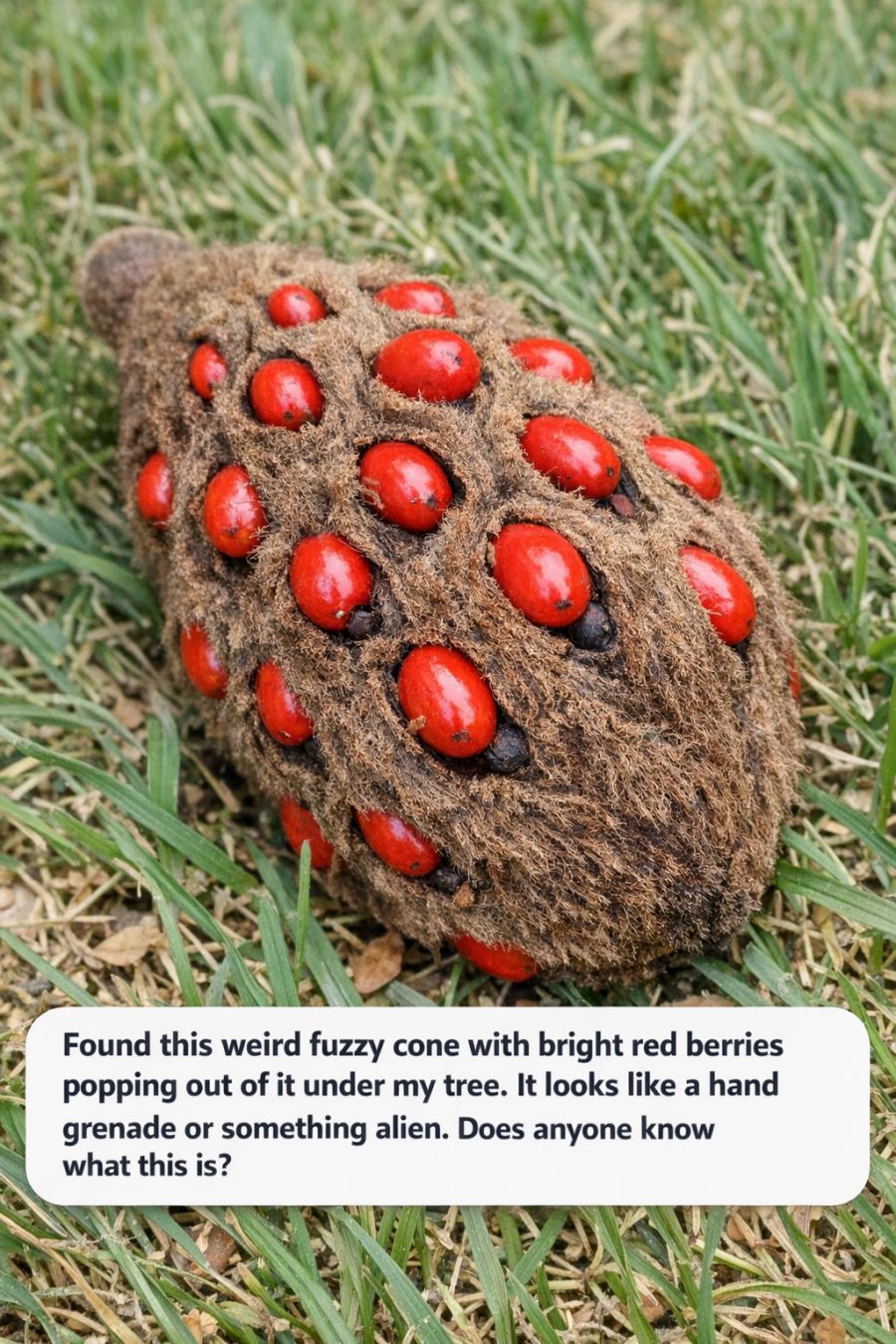
3. Why Those Bright Red Berries Look So Bizarre
The bright red ‘berries’ that emerge from the magnolia seed pod are not berries at all, but rather seeds encased in a fleshy, red aril. This vivid coloration is an evolutionary adaptation designed to catch the eye of birds and other animals. The red arils are packed with nutrients, making them an attractive food source for wildlife. As animals consume the seeds, they inadvertently aid in the dispersal process by excreting the seeds in different locations, facilitating the growth of new magnolia trees.
4. Common Magnolia Species That Produce These Pods
Several species of magnolia trees produce these characteristic seed pods. One of the most well-known is the Southern Magnolia (Magnolia grandiflora), which is native to the southeastern United States. This species is famous for its large, white, fragrant flowers and evergreen leaves. Other species that produce similar pods include the Sweetbay Magnolia (Magnolia virginiana), which has a more slender form and is often found in wetland areas, and the Cucumber Tree (Magnolia acuminata), named for its immature seed pods that resemble small cucumbers before they ripen.
5. When and Why Magnolia Seed Pods Appear
Magnolia seed pods typically appear after the tree has completed its flowering cycle. For most species, this occurs in late spring to early summer. The pods develop over the summer months and begin to open in the fall, revealing the seeds inside. This timing coincides with the active period for many seed-dispersing animals, ensuring that the seeds have the best chance of being spread far and wide. The appearance of seed pods is also an indicator of a healthy tree, as it signifies successful pollination and reproduction.
6. Are Magnolia Seed Pods Or Berries Poisonous?
While the seeds of magnolia trees are not considered highly toxic, they are not typically consumed by humans due to their bitter taste and potential to cause gastrointestinal discomfort. The red arils are more appealing to wildlife, and many birds and small mammals consume them without issue. However, it’s always wise to exercise caution and prevent pets or small children from ingesting them, as individual sensitivity can vary.
7. Wildlife That Loves Magnolia Seeds
Magnolia seeds are a valuable food source for a variety of wildlife. Birds such as cardinals, finches, and grosbeaks are particularly fond of the seeds, often seen plucking them from the pods. Mammals such as squirrels and small rodents also partake in the feast, and their foraging activities can help spread the seeds. This symbiotic relationship between magnolia trees and wildlife plays a crucial role in the ecosystem, promoting biodiversity and the regeneration of forested areas.